
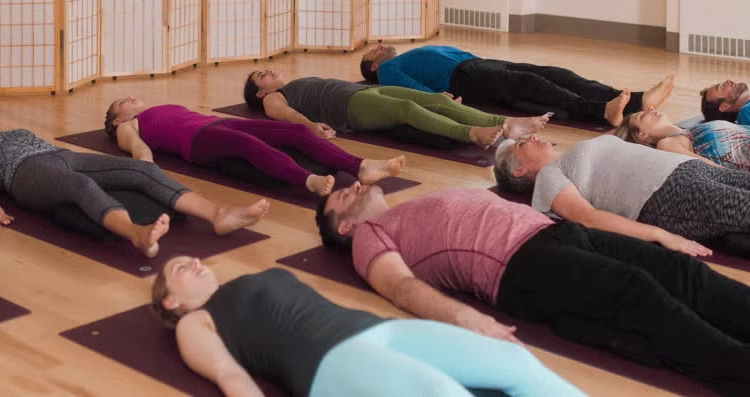
In the modern landscape of yoga, where dynamic flows and physical mastery often take center stage, Yoga Nidra emerges as a subtle yet deeply transformative practice. Also known as yogic sleep, it is neither pure meditation nor simple rest—it is a scientifically validated state of conscious deep sleep that rewires the brain, restores the nervous system, and enhances creativity, memory, and emotional resilience. Unlike traditional asanas, Yoga Nidra operates on the level of neurophysiology and consciousness, making it one of the most advanced tools for inner transformation available to seasoned practitioners.
Understanding the Neurophysiology of Yoga Nidra
Yoga Nidra induces a powerful transition from the active beta brainwave state to the slower alpha, theta, and eventually delta states, which are typically experienced during deep sleep. However, in this practice, the practitioner remains conscious—creating a unique intersection between wakefulness and subconscious processing.
The Brainwave Transition
-
Beta Waves: Associated with active thinking, alertness, and external engagement.
-
Alpha Waves: Represent a calm, reflective, and relaxed awareness.
-
Theta Waves: Emerge during dream-like states, promoting creativity and emotional healing.
-
Delta Waves: The deepest state of rest, linked to cell regeneration and immune repair.
When guided correctly, Yoga Nidra allows practitioners to sustain awareness during the delta state, an occurrence that neuroscientists describe as a “paradoxical state” of consciousness—deep sleep with awareness. This unique condition facilitates cognitive repair, emotional integration, and profound rest.
Beyond Relaxation: The Cognitive Regeneration Effect
Unlike typical meditation that requires focus or effort, Yoga Nidra effortlessly activates the parasympathetic nervous system, allowing the brain to downshift from survival mode into restoration mode. This switch enhances neuroplasticity, enabling the brain to rewire habitual patterns and reduce mental fatigue.
Advanced practitioners often report that a 45-minute Yoga Nidra session equals 3–4 hours of restorative sleep. This is not a myth but a result of the body’s entry into non-REM delta states while maintaining subtle consciousness. Research also shows that Yoga Nidra significantly increases dopamine release, boosting mood, focus, and learning retention—making it especially beneficial for those engaged in mentally demanding work.
The Subtle Anatomy of Yogic Sleep
From a yogic perspective, Yoga Nidra activates the subtle energy body (pranamaya kosha) and harmonizes the five layers of human existence, known as the Panchakosha system:
-
Annamaya Kosha (Physical Body): Complete muscular relaxation reduces physical fatigue and tension.
-
Pranamaya Kosha (Energy Body): Breathing slows, and pranic flow stabilizes throughout the nadis (energy channels).
-
Manomaya Kosha (Mental Body): Emotional turbulence settles, leading to clarity and calmness.
-
Vijnanamaya Kosha (Wisdom Body): Heightened awareness bridges subconscious and conscious dimensions.
-
Anandamaya Kosha (Bliss Body): The practitioner experiences deep peace and connection with pure consciousness.
Balancing these layers through regular practice leads to emotional neutrality, improved intuition, and freedom from psychosomatic tension.
The Role of Sankalpa: Conscious Reprogramming
A key element of advanced Yoga Nidra practice is Sankalpa, a precise intention or resolve planted in the fertile state between consciousness and sleep. When the mind is deeply relaxed, the subconscious becomes highly receptive.
Unlike simple affirmations, a Sankalpa must align with one’s dharma (true purpose) and reflect a deep personal truth. Repeated at the beginning and end of each session, it acts as a neural seed, gradually reshaping thought patterns and behaviors.
For example:
-
“I remain grounded and clear in every situation.”
-
“I act from compassion and courage in all circumstances.”
With sustained practice, these statements penetrate the subconscious, replacing limiting patterns and promoting coherent alignment between thought, emotion, and action.
Yoga Nidra and Emotional Integration
One of the most profound yet lesser-known applications of Yoga Nidra lies in emotional regulation and trauma integration. The practice allows buried emotions to surface gently, without re-traumatization. As the body remains still, the practitioner observes emotional currents with detachment, allowing unprocessed energy to dissolve naturally.
This conscious witnessing activates the insular cortex and prefrontal regions of the brain, enhancing emotional intelligence and self-awareness. For individuals in advanced yogic or spiritual stages, this inner observation becomes a powerful form of pratyahara—withdrawal of the senses and mastery over mental fluctuations.
The Hormonal and Cellular Impacts
Scientific studies have demonstrated measurable physiological shifts during Yoga Nidra. These include:
-
Reduced Cortisol Levels: Leading to lower stress and inflammation.
-
Increased Melatonin Production: Enhancing sleep quality and immune regulation.
-
Stabilized Heart Rate Variability (HRV): Indicating balanced autonomic nervous function.
-
Improved Mitochondrial Efficiency: Promoting better energy metabolism and slower cellular aging.
In long-term practitioners, the endocrine system adapts to the rhythms of deep rest and conscious alertness, supporting hormonal harmony and mental clarity throughout the day.
Advanced Practice: Yoga Nidra for Conscious Evolution
At its highest level, Yoga Nidra transcends physical and psychological healing. It becomes a gateway to conscious evolution—a systematic method to experience turiya, the fourth state of consciousness beyond waking, dreaming, and deep sleep.
Through sustained awareness in this state, practitioners experience the substratum of all consciousness—pure awareness itself. This dimension is beyond the mind yet fully aware, offering glimpses into non-dual realization described in yogic texts like the Mandukya Upanishad.
Advanced Yoga Nidra thus shifts from being a relaxation method to a spiritual sadhana (discipline), merging the finite self with infinite awareness.
Integrating Yoga Nidra into a Daily Routine
For those already familiar with advanced yoga or meditation practices, integrating Yoga Nidra requires precision and consistency rather than duration.
Practical Tips for Experienced Practitioners
-
Time of Practice: Early morning or late evening when brainwave activity naturally slows.
-
Environment: A dark, quiet room with minimal external disturbance.
-
Posture: Lie in Shavasana with subtle support under knees and head to ensure complete stillness.
-
Duration: 30–45 minutes is ideal for cognitive and energetic regeneration.
-
After-Practice Reflection: Sit for a few minutes to integrate experiences before re-engaging with activity.
Consistency is more critical than intensity. Regular practice refines sensitivity, allowing practitioners to recognize subtler layers of awareness and energy dynamics.
FAQs
1. How is Yoga Nidra different from deep meditation?
Yoga Nidra moves beyond meditation’s focus-based awareness and induces a state of conscious sleep, where both hemispheres of the brain synchronize, resulting in total systemic rest and rejuvenation.
2. Can Yoga Nidra replace sleep entirely?
No, but it can substantially reduce the required duration of sleep by improving rest quality and cellular recovery efficiency.
3. How does Yoga Nidra affect creativity and decision-making?
By enhancing theta and alpha brainwave activity, it unlocks subconscious insights and improves clarity, intuition, and problem-solving capacity.
4. Is Yoga Nidra beneficial for burnout and mental fatigue?
Absolutely. Its activation of the parasympathetic system allows the nervous system to recover from chronic stress, mental overload, and emotional exhaustion.
5. Can I combine Yoga Nidra with pranayama or meditation?
Yes. Performing gentle pranayama before Yoga Nidra helps calm the mind, while meditation afterward deepens inner stillness and insight.
6. How long does it take to experience transformation?
Most practitioners report noticeable emotional balance and improved focus within weeks, while deeper cognitive and energetic shifts emerge with consistent long-term practice.
7. What is the ultimate goal of Yoga Nidra in the yogic tradition?
Beyond healing and rest, Yoga Nidra serves as a direct pathway to Self-realization—a recognition of the ever-present awareness beyond all states of mind.
Conclusion: Yoga Nidra is the bridge between science and spirituality, where consciousness becomes both healer and observer. For advanced practitioners, it offers not just rest but revelation—an invitation to experience life from the still point of awareness itself, where every breath becomes an act of renewal and awakening.
