
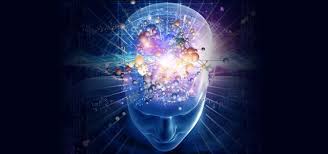
Meditation today is no longer confined to spiritual circles or beginner-level mindfulness practices. Advanced practitioners and neuroscientists are now exploring how deep meditative states can reshape neural circuits, enhance cognitive flexibility, and cultivate metacognitive awareness. This is far from the simplistic notion of “relaxation.” It’s a form of mental engineering that redefines the boundaries of human consciousness.
The Neuroplastic Core of Deep Meditation
Neuroplasticity refers to the brain’s ability to change, adapt, and reorganize itself by forming new neural connections. Long-term meditators have demonstrated remarkable structural changes in regions related to attention, memory, and emotional regulation. Unlike temporary states of calm, these shifts represent lasting rewiring of the brain.
Advanced meditation engages the prefrontal cortex, anterior cingulate cortex, and insula, leading to higher emotional control and increased perceptual depth. Simultaneously, the amygdala—the brain’s fear center—shows reduced activity, meaning that meditators can respond to stress without being hijacked by emotion.
What makes this transformation profound is that these neural adaptations are self-directed. Unlike external therapies or substances, the mind is teaching itself how to become more efficient.
Moving Beyond Mindfulness: Exploring Non-Dual Awareness
While mindfulness focuses on observing thoughts and sensations, non-dual awareness practices—such as Dzogchen or Advaita-based meditation—move beyond the observer-observed duality. The practitioner no longer sees themselves as a “witness” of experience but as the experience itself.
Neuroscientifically, this translates to a deactivation of the Default Mode Network (DMN)—the part of the brain responsible for self-referential thinking and mind-wandering. Reduced DMN activity correlates with heightened states of clarity, unity, and deep cognitive silence.
In these advanced states, the meditator’s perception of “self” dissolves into a continuous field of awareness. From a scientific lens, this represents one of the highest attainable states of neurocognitive integration, where consciousness functions without fragmentation.
Meditation and Emotional Intelligence: Rewiring the Limbic System
Emotions are often seen as obstacles to clarity, but advanced meditation reframes them as energetic data—signals to be observed, not suppressed. Through consistent practice, the limbic system, which governs emotional processing, becomes synchronized with the prefrontal cortex. This neural synchronization allows practitioners to experience emotions without being controlled by them.
The results are extraordinary:
-
Emotional resilience: Reduced reactivity to stressors.
-
Enhanced empathy: Activation of mirror neurons linked to compassion.
-
Cognitive stability: Improved impulse control and emotional balance.
This harmony between logic and emotion fosters a balanced intelligence, where intuition and reasoning coexist rather than compete.
Altered States of Consciousness and Cognitive Flow
Advanced meditation often induces altered states of consciousness similar to flow experiences seen in athletes or artists. During these states, brain waves shift from beta (active thought) to alpha, theta, and even gamma frequencies, creating heightened awareness, creativity, and insight.
Gamma waves, in particular, are associated with integrative cognition—the ability to connect disparate ideas into unified understanding. Studies of long-term meditators reveal sustained gamma activity, suggesting that their brains operate at a higher baseline of coherence and integration.
These altered states aren’t escapist; they represent a peak functional mode of human cognition, where the mind operates at maximum efficiency and minimum resistance.
The Epigenetic Impact of Meditation
One of the most fascinating discoveries in recent years is that meditation can influence gene expression. Research suggests that consistent meditative practice can downregulate genes associated with inflammation and upregulate those linked to immune function and cellular repair.
In other words, the benefits of meditation extend beyond neural pathways into biological optimization. The practice becomes a form of self-directed evolution, allowing individuals to reshape their physiological destiny.
Through focused attention, practitioners engage the parasympathetic nervous system, activating rest-and-repair responses that counteract chronic stress. Over time, this leads to improved longevity, cellular resilience, and overall vitality.
The Role of Metacognitive Awareness in Advanced Practice
At advanced levels, meditation cultivates metacognitive awareness—the ability to observe the workings of one’s own cognition. This isn’t simply about being aware of thoughts; it’s about understanding how the mind constructs reality itself.
Metacognition allows practitioners to:
-
Detect subtle biases in perception.
-
Recognize habitual thought loops before they take root.
-
Access higher-order reasoning without emotional distortion.
This heightened awareness turns meditation into a laboratory for self-inquiry, where the meditator becomes both subject and scientist, unraveling the patterns that define identity.
Meditation and Collective Consciousness
Beyond the individual, meditation has measurable effects on collective systems. Group meditation studies indicate a phenomenon known as the “coherence effect,” where multiple individuals meditating together generate synchronized heart and brain rhythms that influence the surrounding environment.
This suggests that consciousness is not isolated but interconnected, capable of affecting broader energetic fields. Such findings are giving rise to a new paradigm—social neurodynamics—which explores how individual awareness contributes to collective harmony.
Integrating Advanced Meditation into Modern Life
True mastery in meditation isn’t about withdrawal from the world but full engagement with heightened clarity. Advanced practitioners learn to bring their meditative awareness into daily activities—decision-making, communication, and creative expression.
To integrate advanced meditation effectively:
-
Shift from practice to presence: Let awareness continue beyond the cushion.
-
Engage in reflective journaling: Record moments of deep insight and emotional clarity.
-
Practice interoceptive awareness: Observe internal sensations to maintain mind-body alignment.
-
Balance stillness with motion: Alternate between seated meditation and mindful movement.
The result is a state of embodied mindfulness, where awareness permeates every aspect of existence.
The Future of Meditation and Consciousness Research
Meditation is moving from a mystical pursuit to a legitimate scientific frontier. Emerging fields such as neurophenomenology and computational consciousness studies aim to decode subjective experience through brain-based modeling.
Advanced technologies like real-time fMRI neurofeedback and brain-computer interfaces are beginning to map meditative states with unprecedented precision. In the near future, we may be able to train consciousness directly through adaptive neurofeedback loops, combining the wisdom of ancient traditions with the intelligence of modern machines.
This synthesis points toward a new era where meditation is not only a personal discipline but a scientific pathway to unlocking the full potential of the human mind.
FAQs
1. How does long-term meditation alter brain structure?
It increases cortical thickness in areas responsible for attention, emotional regulation, and sensory processing, creating more efficient neural communication.
2. Can meditation truly change gene expression?
Yes, research indicates that deep meditation can influence genes related to inflammation, immunity, and stress response, promoting cellular health.
3. What differentiates non-dual awareness from mindfulness?
Mindfulness observes experiences objectively, while non-dual awareness transcends the observer–observed divide, merging consciousness into a unified state.
4. Are altered states during meditation similar to psychedelic experiences?
While both alter perception, meditative states arise from disciplined control and integration, not external substances, leading to sustained transformation rather than temporary change.
5. How does meditation enhance decision-making?
By strengthening prefrontal activity and reducing emotional interference, meditators make clearer, more strategic choices under pressure.
6. Can group meditation influence collective consciousness?
Studies suggest that synchronized meditative coherence can positively affect emotional climates and even reduce societal stress indicators.
7. What is the next frontier of meditation research?
The merging of neuroscience, artificial intelligence, and ancient meditative systems to create measurable, technology-assisted paths to higher consciousness.